

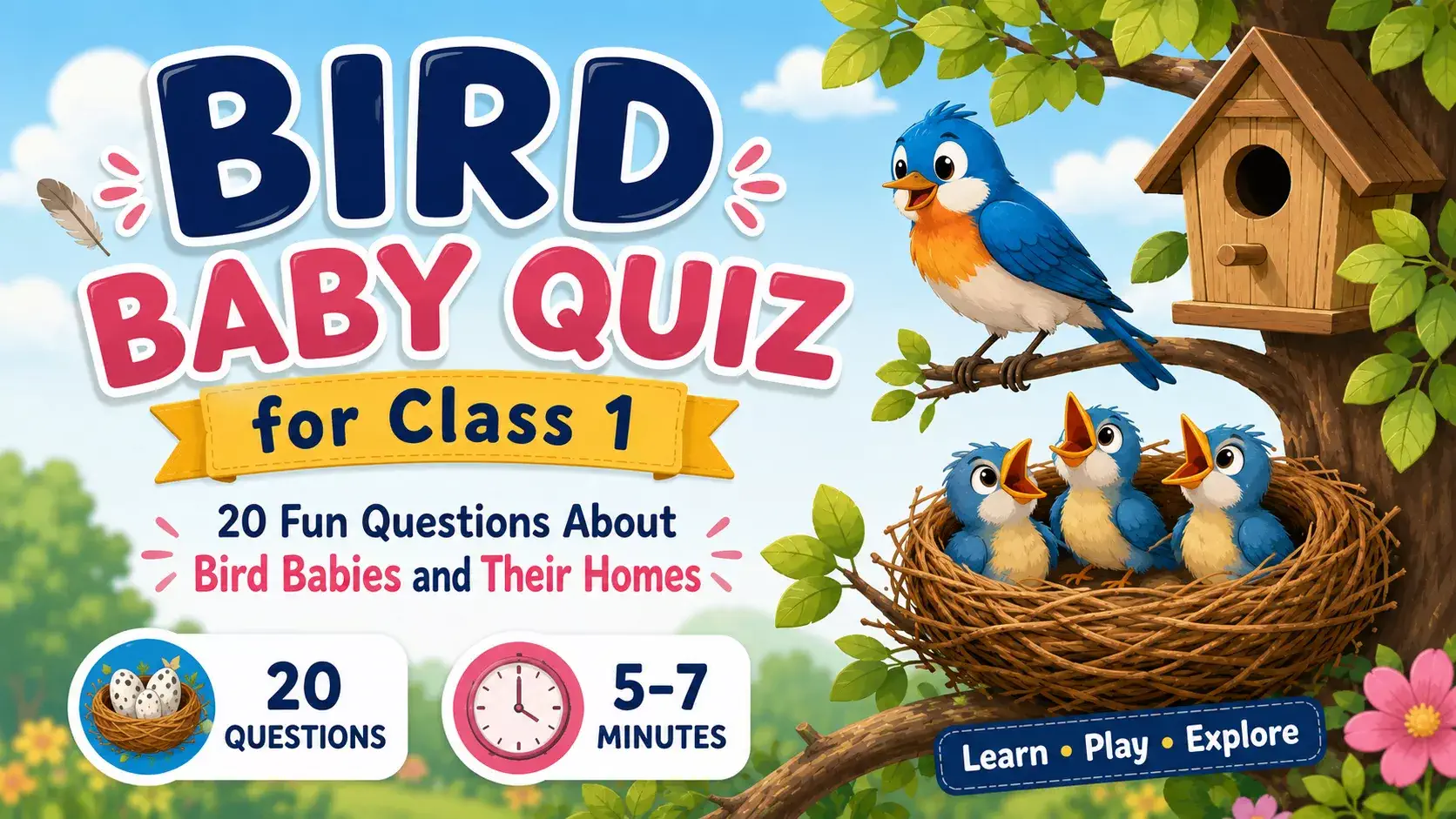
Do you know what a baby bird is called? Do you know where baby birds live and how their parents care for them? This Bird Baby Quiz for Class 1 is a fun and easy way for young learners to discover more about baby birds.
The quiz includes 20 simple multiple-choice questions about chicks, nests, food, feathers, sounds, parents, and how young birds learn to fly.
🐣 Baby Birds Quiz
Ready to test your knowledge? Take the quiz and see how many questions you can answer correctly!
What Will Kids Learn?
This quiz helps Class 1 students learn simple facts about baby birds. Children will discover:
- What people call a baby bird
- Where baby birds stay
- What baby birds eat
- How parent birds care for their young
- How baby birds use their beaks
- Why baby birds make sounds
- How baby birds grow feathers
- How young birds learn to fly
10 Fun Facts About Baby Birds
1. A Baby Bird Is Called a Chick
People often call a young bird a chick. A chick starts life inside an egg. When the egg hatches, the chick comes out.
2. Baby Birds Stay in Nests
Many baby birds stay in a nest after they hatch. Parent birds build nests to give their young a safe place to rest and grow.
3. Parent Birds Feed Their Babies
Baby birds cannot find food by themselves when they are very young. Parent birds bring food to the nest and feed their chicks.
4. Baby Birds Make Sounds
Baby birds often chirp or peep. They use these sounds to communicate with their parents.
5. Baby Birds Need Warmth
Young birds need warmth while they grow. Their parents help keep them warm, and feathers also provide protection from the cold.
6. Baby Birds Grow Feathers
A young bird develops more feathers as it grows. Feathers help birds stay warm and eventually help them fly.
7. Baby Birds Have Small Beaks
Baby birds use their beaks to receive and eat food. Their beaks also help them explore their surroundings as they grow.
8. Baby Birds Practice Flying
Young birds do not become expert flyers right away. They stretch their wings, move around, and practice before they can fly well.
9. Baby Birds Depend on Their Parents
Parent birds provide food, warmth, and protection. Young birds depend on their parents until they become more independent.
10. Young Birds Eventually Leave the Nest
When a young bird grows stronger, it becomes ready to leave the nest. It can then explore its surroundings and continue learning how to fly and find food.
Why Should Children Learn About Baby Birds?
Learning about baby birds helps children understand the natural world around them. It also teaches them to care about animals and respect wildlife.
A simple topic like baby birds can introduce children to important ideas such as growth, family, food, shelter, and survival.
Teachers can use this quiz as a classroom activity. Parents can also use it for fun learning at home.
Frequently Asked Questions
1. What is a baby bird called?
A baby bird is commonly called a chick.
2. Where do baby birds live?
Many baby birds stay in nests after they hatch from their eggs.
3. What do baby birds eat?
Parent birds bring food to their young. The type of food depends on the bird species.
4. How do baby birds learn to fly?
Young birds strengthen their wings and practice moving and flying before they become confident flyers.
5. Why do baby birds chirp?
Baby birds make sounds such as chirps and peeps to communicate with their parents.
6. Who takes care of baby birds?
Parent birds usually feed, protect, and care for their young.
Try More Bird Quizzes
If your child enjoyed this bird quiz, try other beginner-friendly bird quizzes on ProveGuru, such as:
