

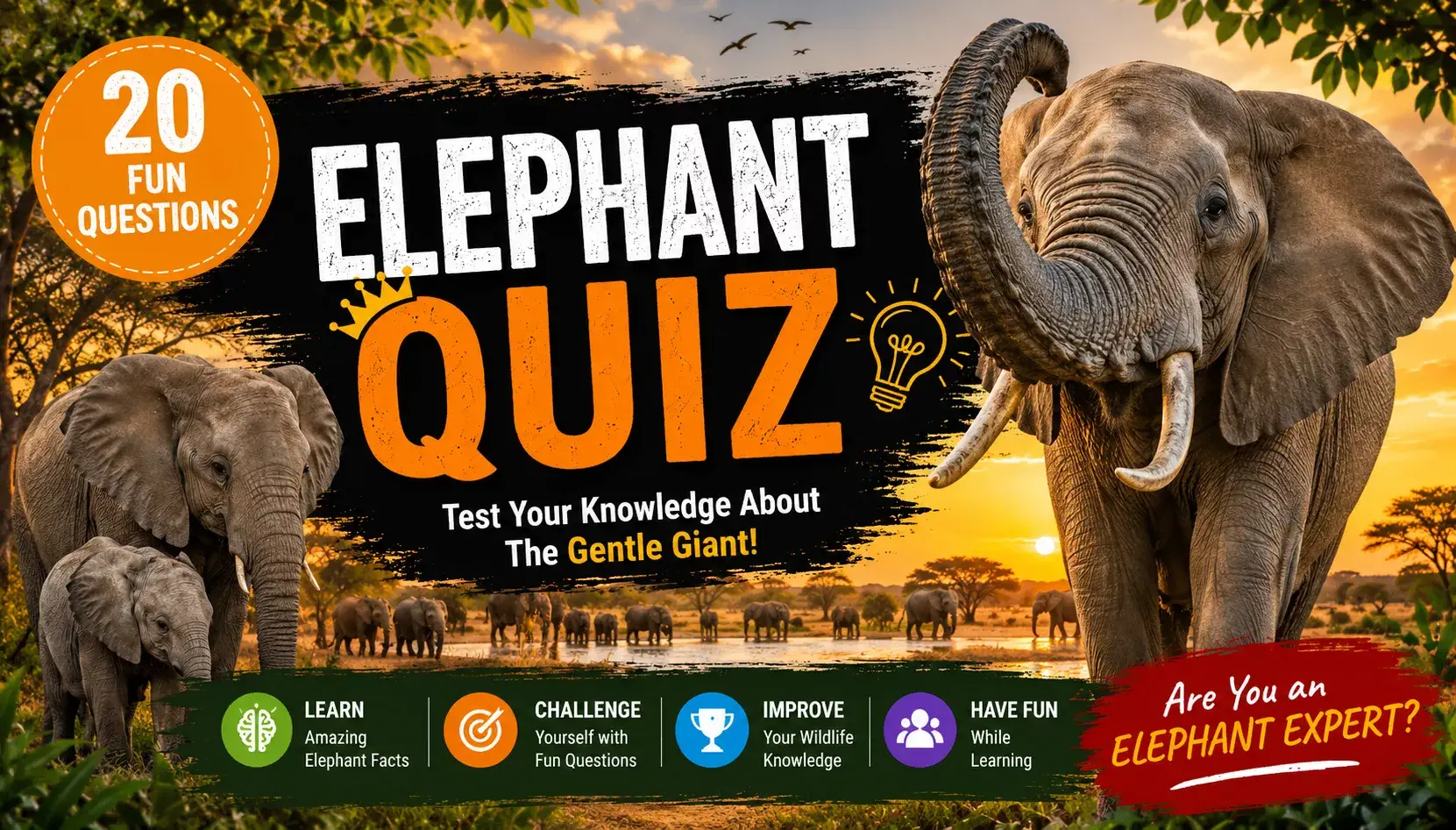
Elephants are the largest land mammals alive today. They belong to the family Elephantidae and are known for their impressive size, long trunks, large ears, and curved tusks. Despite their enormous bodies, elephants are gentle giants with strong family bonds and remarkable intelligence. This elephant quiz will enhance your knowledge about living animals.
Today, there are three living species of elephants:
- African Bush Elephant (Loxodonta africana)
- African Forest Elephant (Loxodonta cyclotis)
- Asian Elephant (Elephas maximus)
African elephants are generally larger than Asian elephants. One easy way to tell them apart is by their ears. African elephants have large, fan-shaped ears, while Asian elephants have smaller, rounded ears. Their trunks are also slightly different, helping scientists identify each species.
Elephants are found across parts of Africa and Asia. African elephants live in grasslands, savannas, forests, and deserts, while Asian elephants are commonly found in tropical forests, grasslands, and wetlands. They require large habitats because they travel many kilometres each day in search of food and water.
One of the elephant’s most amazing features is its trunk. The trunk is actually a combination of the nose and upper lip. It contains over 40,000 muscles, making it one of the most flexible and useful body parts in the animal kingdom. Elephants use their trunks to breathe, smell, drink water, grab food, communicate, and even greet one another.
Elephants are herbivores, meaning they eat only plants. Their diet includes grass, leaves, bark, roots, fruit, and shrubs. An adult elephant may consume more than 150 kilograms of food and drink over 100 litres of water in a single day.
Another remarkable feature is their intelligence. Elephants have excellent memories and can recognise family members even after many years apart. They solve problems, use simple tools, and show emotions such as happiness, curiosity, grief, and compassion. Scientists have even observed elephants comforting injured herd members and mourning those that have died.
Elephants live in close family groups called herds, usually led by an older female known as the matriarch. She guides the herd to food and water using her years of experience. Young elephants stay with their mothers for many years, learning essential survival skills from older family members.
These magnificent animals also play a vital role in maintaining healthy ecosystems. As elephants move through forests, they spread seeds in their dung, helping new plants grow. They create pathways used by other animals and dig water holes that become important water sources during dry seasons. Because they help shape their environment, elephants are often called ecosystem engineers.
Unfortunately, elephants face many threats today. Habitat loss, human-wildlife conflict, climate change, and illegal poaching for ivory have caused elephant populations to decline in many regions. Governments, conservation organisations, and local communities are working together to protect these incredible animals through wildlife reserves, anti-poaching efforts, habitat restoration, and education.
Learning about elephants is important because they teach us about biodiversity, conservation, and the balance of nature. They remind us that every species has a unique role in keeping ecosystems healthy. By understanding elephants and the challenges they face, students can develop greater respect for wildlife and become future protectors of our planet.
Ready to see how much you know? Take our Elephant Quiz featuring 20 fun multiple-choice questions. Challenge yourself, learn fascinating facts, and discover why elephants are among the most extraordinary animals on Earth.
10 Interesting Elephant Facts
- Elephants are the largest land animals on Earth.
- An elephant’s trunk contains more than 40,000 muscles.
- 3.Elephants can recognise themselves in a mirror, a sign of high intelligence.
- African elephants have much larger ears than Asian elephants.
- Elephants communicate using very low-frequency sounds called infrasound.
- A baby elephant is called a calf.
- Elephants usually live in family groups led by an experienced female called the matriarch.
- Elephants help forests grow by spreading seeds through their dung.
- An elephant can eat more than 150 kg of food every day.
- Elephants can live for 60–70 years in the wild under suitable conditions.
Quiz Time

Frequently Asked Questions (FAQs)
1. What is an elephant?
An elephant is the world’s largest living land mammal. It belongs to the family Elephantidae and is known for its long trunk, tusks, and remarkable intelligence.
2. How many species of elephants are there?
There are three living species of elephants:
- African Bush Elephant
- African Forest Elephant
- Asian Elephant
3. What do elephants eat?
Elephants are herbivores. They eat grass, leaves, bark, roots, fruit, and other plants. An adult elephant can eat more than 150 kg of vegetation each day.
4. Why are elephants important?
Elephants help maintain healthy ecosystems by spreading seeds, creating forest pathways, digging water holes, and supporting biodiversity. They are often called ecosystem engineers.
5. Why are elephants endangered?
Elephants face threats from habitat loss, illegal ivory poaching, climate change, and conflicts with humans. Conservation efforts are helping protect their populations.
Continue Learning with More Fun Quizzes
If you enjoyed this Elephant Quiz, explore more exciting educational quizzes on ProveGuru:
New quizzes are added regularly to help you learn while having fun.
